Long-form / 深度專題
電力與能源:由街燈到管制協議
Electricity and energy: from street lamps to the Scheme of Control
香港嘅電力同燃氣供應係幾時開始,政府又用咩方法規管?
香港嘅能源故事由街燈開始:煤氣先照亮中環,港燈再把電燈點起,中電隨後供電九龍。兩間電力公司、一個跨境電網、一座核電站,加上一份又一份管制協議,構成今日嘅結構。每一次燃料轉換,都同時係一次政治決定。
約 4 分鐘 · 6 節 · 20 條時間線 · 3 份文獻
English
1. Gas and electricity: two companies, two cities
On 3 December 1864 the gas company began operating, supplying 500 street lamps in Central through 24 kilometres of pipe. The purpose was practical: streets needed light for people walking at night, and with light the city’s activity could extend into the evening.
Electricity came more than two decades later. On 1 December 1890 Hongkong Electric began supplying power at six in the evening, lighting Hong Kong’s first electric street lamps in Central. From gas lamp to electric lamp, the colour of the night sky changed, and energy shifted from burning to generation.
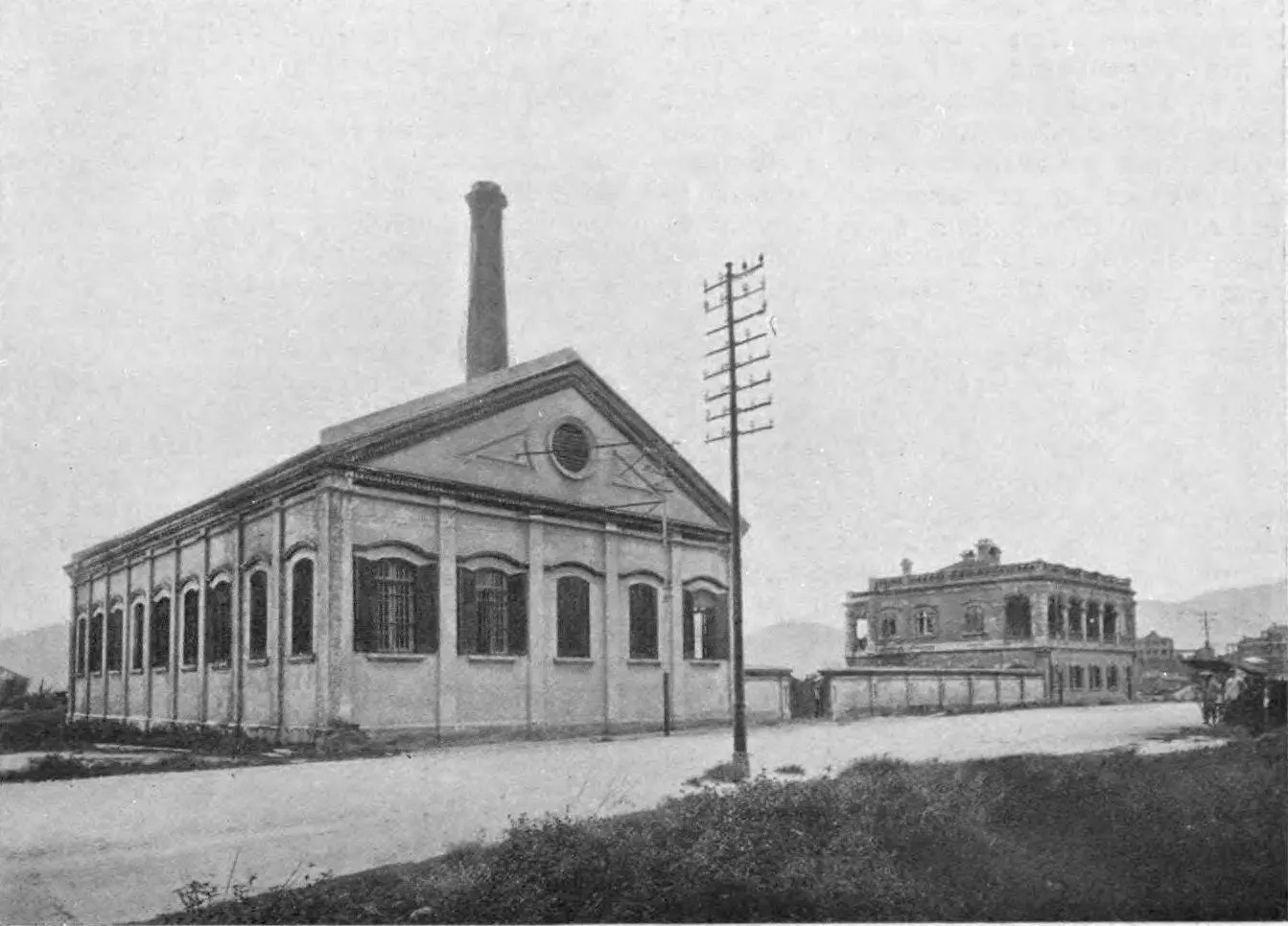
Kowloon’s supply came from another company. On 25 January 1901 China Light and Power completed registration; its first power station at Des Voeux Road in Hung Hom, now Chatham Road, supplied the Kowloon Peninsula from 1903. The island and Kowloon each had a power company, a two-company, two-market structure that persists.
2. War and after: blackouts, grids and industry
The more centralised a supply system, the more it fears interruption. On 26 February 1940 China Light and Power’s Hok Un Power Station in Hung Hom opened, concentrating Kowloon’s generating capacity in one plant. Four years later, on 20 August 1944, fuel shortages stopped electricity and gas supplies throughout Hong Kong. That day showed where the weakness lay: not in the wires but in the fuel.
Post-war work extended the grid to places not yet connected. In 1957 China Light and Power completed a ring transmission network on Lantau, giving the island a reliable supply. Moving from private generators to the grid was a material condition for change in rural life.
3. The oil crisis and a cross-border grid
The oil crisis of 1973 turned energy into a question of national security. Regulations effective 9 December that year authorised the Government to regulate the supply of gas and electricity. The point was not only price control but recognition that power and gas are necessities the Government must be able to step in to protect.
Six years later Hong Kong first sent electricity beyond its boundary. On 31 March 1979 representatives of the two sides pressed the button together at China Light and Power’s control centre in Kwai Chung, after which the company supplied one million units of electricity a day to Guangdong. The flow was outward from Hong Kong, the reverse of later gas imports from the mainland: the same border can carry flows both ways.
4. Daya Bay: cross-border nuclear power and opposition
On 13 December 1982 the State Council’s executive meeting decided to build a nuclear power station at Daya Bay in Guangdong. The station lay outside Hong Kong but close to the city, so from the siting stage it was more than a mainland engineering question.
Opposition was cross-border too. On 20 August 1986 a joint conference campaigning to stop the plant collected 1.04 million signatures from Hong Kong residents, and 12 representatives submitted a petition to the State Council’s Hong Kong and Macao Affairs Office. The number shows that siting an energy facility can mobilise a whole society, not only the residents next door.
Construction went ahead. On 7 August 1987 the main works at Daya Bay began. On 1 February 1994 the first unit started operating, and on 6 May the second unit entered commercial operation. From siting decision to two operating units took twelve years — a timescale utterly different from the rhythm of political controversy.
5. Natural gas and control agreements
Fuel switching came step by step. In 1996 China Light and Power’s Black Point Power Station began operating and the fuel for generation switched to natural gas. Moving from coal to gas cut sulphur dioxide and particulates, but it also turned the supply chain from locally stored coal into a cross-border pipeline, changing what energy security meant.
The Government also began writing renewables into targets. In 2005 it published Hong Kong’s first sustainable development strategy, setting a target of 1 to 2 per cent of total electricity consumption from renewable energy by 2012. The target gave later feed-in tariffs and solar installations a reference point.
Gas supply depends on long-term agreements. On 28 August 2008 the Government and the National Energy Administration signed a memorandum of understanding for the mainland to supply natural gas to Hong Kong for twenty years from 2008. On 19 December 2012 the Hong Kong branch of the West-East Gas Pipeline II was commissioned, carrying gas through the Shenzhen Dachen Island station to Black Point.
The power companies themselves are governed by agreement. On 25 April 2017 the Government signed new Schemes of Control with CLP and Hongkong Electric for 15 years, with the permitted rate of return lowered to 8 per cent. That month the agreements introduced a feed-in tariff, allowing renewable generation to connect to the grid and be bought at a set rate.
Receiving capacity was still short. In December 2020 construction began on an offshore liquefied natural gas receiving station. From pipeline to offshore terminal, Hong Kong moved beyond reliance on a single cross-border pipe towards a node that can receive seaborne LNG.
6. What remains unfinished
This dossier adds no year-by-year fuel mix. How much comes from coal, gas and nuclear requires annual comparison of the two companies and government statistics, and the definitions — local generation versus imported power — differ, so they cannot be added.
Tariffs and fuel adjustment charges are left blank too. A bill contains the basic tariff, the fuel adjustment and government charges, each adjusted by a different mechanism, so a single “tariff rise or fall” cannot be stated.
Blackout incidents and supply reliability are not registered annually. Only the territory-wide cut of 1944 is stated, and local incidents are not combined into a trend.
Power delivered from Daya Bay to Hong Kong and arrangements for nuclear waste are not verified item by item: the first involves annual settlement and the second mainland handling arrangements, neither of which is in the registered entries.
Actual renewable shares, feed-in tariff volumes and participant numbers are not recorded annually, so this dossier states targets and institutions only, not results.
Gaps
- The annual fuel mix is not verified; local generation and imported power use different definitions and cannot be added together.
- The composition of tariffs and fuel adjustment charges, and each adjustment, are not registered annually, so no single “tariff rise or fall” is stated.
- Blackout incidents and supply reliability are not recorded annually; only the territory-wide cut of 1944 is given.
- Power delivered from Daya Bay and nuclear waste arrangements are not verified item by item.
- Actual renewable shares, feed-in tariff volumes and participant numbers are not registered annually; only targets and institutions are stated.